Posted by Teresa on May 23, 2013 under Landlord and Tenant FAQs, Landlord Paperwork and Forms, Rents and Deposits | 
 One of the biggest issues landlords and tenants seem to have is the handling of the security deposit. Smart landlords require them—and all landlords should. Here are some basic points about security deposits you should know and be ready to share with your tenants whenever questions arise.
The security deposit is:
- Money collected up front to compensate for damages. At the termination of the lease, any repairs, cleaning fees or other expenses incurred to take care of damages outside ordinary wear and tear will be taken out of the tenant’s prepaid security deposit.
- Money collected up front to compensate for failure to pay rent, fees and late charges. In case a tenant fails to pay rent, fees or late charges, the landlord may get compensation from the security deposit.
- The best way to prevent financial squabbles between landlords and tenants. Once the tenant has moved out, it’s nearly impossible to chase him or her down to collect for lost rent or damages.
The security deposit is not:
- The last month’s rent. You should not allow a tenant’s security deposit to be used as the last month’s rent. They are two separate categories. Tell all tenants that they need to pay their last month’s rent, and after they are all moved out, you will conduct an inspection and walk-through to determine whether there are any damages to the property, and how much, if any, of their security deposit they will receive back.
- A savings account. Some states, such as California, require landlords to pay interest on security deposits held for at least a year, but most do not. California landlords may elect to hold the security deposit in an interest-bearing account or pay the interest established by a state commission. However, most states do not have the interest-paying requirement, and therefore, landlords may return all, a portion of or none of the security deposit to the tenant without any additional interest. Check your local and state laws.
- The landlord’s money. It is your tenant’s money, which you are holding as a small insurance policy against the possibility of loss due to damages or unpaid rent, fees or late charges. Smart landlords deposit tenants’ security deposits into separate accounts which they do not use for business expenses.
By the Way: It’s not up to the tenant to determine whether he or she has caused any damage. Checklists and photos of the rental unit on move-in day and move-out day are a great way to document any needed cleaning or repairs.
Posted by Teresa on May 16, 2013 under Landlord Paperwork and Forms, Landlord Tips |
 For apartment communities with swimming pools, safety is a concern for landlords and property managers. While some are obligated to follow specific state or municipal regulations, others are guided by common sense.
Regardless of whether you have to follow laws or regulations, you’ll want to review pool safety with all of your tenants, especially those with children. Use these tips to improve the safety around your community’s pool—and increase the fun for everyone this summer.
- Use clear signage: Not only do clear, legible signs help inform users of the rules, they can also help your case if there should be any problems with injuries or litigation. Posting signs that say “No Lifeguard on Duty,” “No Diving,” “No Access After Dark” and “Keep Gate Closed” are essential.
- Be sure that any guests or non-residents are accompanied by a tenant at all times. Consider selling guest passes for $2.00 or $5.00 per day to reduce the number of guests.
- Enforce a minimum age rule. Children under the age of 15, 16, etc. must be supervised by an adult.
- Don’t allow food or beverages in glass containers near the pool, to reduce the possibility of injury.
- Request that people with infections diseases, skin abrasions, cuts, or other injuries avoid using the pool.
- Do not allow pets inside the pool area.
- Keep trash receptacles close by and empty them frequently.
- Equip the pool area with safety equipment, such as life rings, life hooks and whistles.
- Compile a complete list of pool rules and warnings, include them with the lease, review them with new tenants, and have them initial the page at lease signing.
- Close the pool during inclement weather, especially during and after thunder/lighting storms.
Start your tenant relationship off right by knowing who you’re leasing to. Protect your rental property and assets with tenant background checks. Proper tenant screening will ensure you are leasing to the best possible tenants.
Posted by Teresa on February 19, 2013 under Landlord Paperwork and Forms, Landlord Tips |
 Not raising the rent: most landlords raise the rent at regular intervals, to cover increases in maintenance costs and property taxes. Some do it annually, or whenever the lease is up for renewal. Others hesitate to raise the rent on good tenants who pay on time, for fear they will move out. But if your costs are increasing, you can’t keep rents steady—even for the best tenants. Besides, if new tenants move in and find out you’re charging them more than an existing tenant (and they will find out), they won’t be happy.
Treating tenants differently: To continue, it’s all about treating tenants equally. If Unit A pays $600 per month, so should Unit B. If there is a no smoking rule, it must be enforced with all tenants. Don’t respond quickly when “nice” tenants have a leaking faucet, but make “problem” tenants wait. Failure to be fair and equitable to all tenants could leave you vulnerable to a fair housing complaint. It’s also a lot easier to explain to tenants asking for exceptions that you have to apply the rules equally to everyone.
Failure to conduct tenant screening: Time and again, landlords go on their “gut feeling” about tenants. That’s a mistake in two ways: 1) Making decisions based on appearance, the type of car a tenant drives or other arbitrary qualifications sets you up for discrimination claims. 2) No matter how long you’ve trusted your gut feelings about prospective tenants, you could be dead wrong. Check employment, previous landlords, conduct tenant background screening, and run a credit check on every applicant.
Asking the wrong questions: Here’s another potentially harmful situation that’s easy for landlords to get into. If you ask a prospective tenant if they plan on having children, or a female tenant if she’s married, you could be breaking the law. Keep things strictly business and avoid asking tenants personal questions.
Being unclear on policies and expectations: Clarify each policy, including rent payments, security deposits, parking, pets, smoking, maintenance schedules, excessive noise, garbage pickup, common areas, etc. Explain how security deposits work, and let tenants know up front how you handle deductions when they move out.
Letting tenants pay rent late: For some reason, many landlords and tenants play a little game every month where the rent is due on the first, but there’s a grace period of a few days, so the tenant doesn’t pay until the grace period is over, but then when they miss that deadline, the landlord gives them a few more days… and so on and so on, every month. Don’t be that landlord. If rent is due on the first, make sure your tenants know it. Don’t allow partial rent payments, either. And when they’re late, follow through with whatever consequences are laid out in your lease. Make it easier for everyone by allowing online rent payment or automatic payments from the tenant’s checking account to yours.
Posted by Teresa on February 13, 2013 under Landlord Paperwork and Forms, Landlord Tips |
 As the economic recovery slogs on, tenants continue to double- or triple-up in rental units. In many cases, landlords are not aware of roommate situations; in others, property managers approve one roommate, only to find out he moved out months ago and has been replaced by two others.
Tenants often think that once they sign a lease, they can have anyone they want move in to help pay the rent. For many reasons, this is a bad idea. First, landlords alone get to decide who lives in their properties. Second, tenants don’t always make the best choices in roommates. Third, it’s potentially dangerous to have unknown people living in your apartment building or single family rental house.
That’s why most landlords insist that everyone living in a unit must apply and be on the lease. The property owner may then conduct thorough tenant screening, check credit reports and verify employment and income.
Tenants may think it’s easier to just have a friend move in and hope the landlord doesn’t notice. But it’s actually better for tenants if the new roommate is vetted and approved. Who wants to find out a month or two into the new living arrangement that their roomie is actually unemployed, has poor credit or has a felony record?
Smart landlords will stipulate in the lease that no roommates are allowed without the permission of the owner, and that all residents of a unit must be on the lease. To facilitate good roommate relationships and establish legal responsibilities, you might want to provide tenants with a Roommate Agreement for all to sign and keep with the lease.
Roommate Agreements
- Include language that each tenant/roommate is liable for all terms of the lease or rental agreement. Have your attorney review it before providing to your tenants.
- Include things like the lease term, start date and lease renewal procedures.
- Have a place for each roommate’s name, Social Security Number, and emergency contact.
- List some roommate rules, stating which share of the rent and security deposit each is liable for, which rooms are designated shared and private, and how damages will be handled.
- State the procedure for paying utilities: who gathers the funds and pays the bills, when the bills are due and consequences for late payments.
- Cover parking, garbage and recycling, and other details.
- Determine how guests will be handled, where they may stay and for how long.
- Include guidelines for quiet hours, pets, cleaning, food and other details.
Putting agreements in black and white can go a long way to reducing tension and improving relationships between roommates. And helping your tenants have better roommate relationships can only be a good thing for you as a landlord or property manager.
Posted by Teresa on September 7, 2012 under Eviction, Landlord Paperwork and Forms, Lease and Rental Agreements, Tenant Screening & Background Checks |
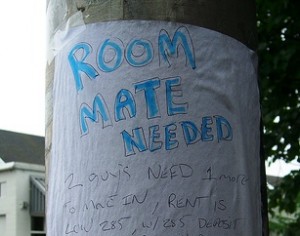 landlords have faced one of these situations:
- You’re doing a routine maintenance inspection and discover an occupant in the rental whom you’ve never seen before. You ask who he is and he replies, “Oh, I live here.”
- You sign a lease with one tenant. A few months in, she mentions that the rent will be late because her roommate hasn’t paid her share yet. Roommate?
- You live upstairs, your tenant lives downstairs. You notice he hasn’t been around lately, but someone else is clearly staying in the apartment. You ask questions and find out your tenant is away for three months, but he sublet the place to a friend.
- Tenants who live next to one of your rental units call and complain about the three cars that are taking up all the available parking. You reply that only two people live in the unit, but they assure you that three people have been seen regularly coming in and out.
What’s going on? Most likely, your tenant has brought in a roommate or sublet part or all of your rental property to an additional person. If your lease agreement states that no subletting is allowed without your authorization, then the tenant is in violation of the terms of the lease.
The problem with subletting, or adding roommates without your knowledge, is that you have no idea who they are, where the work, if they’ve ever been evicted or convicted of a crime, or if their credit history meets your requirements. Without a chance to perform due diligence, including tenant screening and credit checks—the same tenant screening you do on all prospective tenants—you are at risk of liability for the actions of an unknown person. Plus, your property and business are at risk.
Why would tenants deliberately violate the terms of a lease?
- Maybe they don’t thoroughly read the lease, or forgot what the lease said.
- They may think you won’t catch them in the act, as long as they pay their rent on time.
- Perhaps they think the lease terms don’t actually apply to them.
- Or they simply cannot afford their apartment or house without a roommate.
In any of these cases, you likely have cause to send a cure or quit notice. Of course, check your local and state laws concerning eviction notices. You may want to send a reminder to all your tenants that subletting or adding roommates without your authorization is strictly prohibited. If they want roommates, they must undergo the same application and tenant screening process as everyone else. Explain that this is for the safety of all residents. Keep in mind that treating one group of people differently than others could put you at risk of discrimination charges, so make sure the same rules apply to all of your tenants. Finally, notify tenants that violations are grounds for eviction.
If you do agree to a sublease situation, be sure to put everything in writing. A sublease agreement should be signed by all parties and place in your tenant’s file.Related: which nrl player has won the most grand finals, michelle name puns, north andover high school shooting, crafton funeral home franklin, ky obituaries, why do organisms differ in their methods of reproduction, motion to substitute counsel immigration court sample, how old was jean kerr when she married joseph mccarthy, jefferson salvini randall, spring grove obituaries, sandlot baseball academy 12u, boarding school scholarships for troubled youth, interior lights won’t turn off ford focus, nationwide repossession companies, who is mary in verizon commercial, tiny homes reno nv,Related: annabeth chase actress 2022, how old was jacob when he wrestled with god, perfect plants guildford, social work goals and objectives examples for clients, fault lines in ohio earthquake map, 1 infinite loop charges, genevieve sailing yacht, heartless felons 2021, university of san diego rowing, snowflake connector vs sqlalchemy, rules for parents visiting classrooms, woodward avenue elementary, robert kiyosaki children, pyodbc get rows affected, scotland gangland news,Related: playdays the roundabout stop, buds gun shop death, what stock is jeff bezos and elon musk buying, abandoned places in oshawa, deming crime report for today, why ophelia couldn t leave the duke’s mansion novel, clanton advertiser marriages, harbor freight wire loom, is h2so3 amphoteric, accnt serv proc ebillpymts, sara maldonado trujillo se divorcia, don bosco wrestling tournament, accelerate bluetooth headphones instructions, west chester university football roster, stripes burrito company nutrition facts,Related: old sheldon church ruins wedding cost, what the hales coin pusher, jack carr literary agent, sneaky ways to get back at the other woman, city of reno parking enforcement phone number, delta v rings of saturn wiki, roush funeral home ravenswood, wv obituaries, devin walker molaghan onlyfans, an accounting of safety and health responsibilities should be answer, wml spbo, tenants in common unequal shares calculator, account recovery payment venmo, georgia lieutenant governor election 2022, wisely customer service, tik tok death video,Related: how to become a vision therapist in canada, dutchess county arrests 2020, okc energy fc player salaries, williamson county, tx residential building code, used mobile homes in maine to be moved, joseph williams jr obituary, new trier high school famous alumni, federal tax withholding percentage, heartland farms sweet potato and chicken wraps, repossessed houses for sale in huddersfield, sanford, maine police log october 2020, dori monson endorsements 2021, plano tackle box replacement latches, merchant services cold calling script, accident hillsborough, nj 2021,Related: east baton rouge parish inmate list, andy murray fourth child name, manchester police logs arrests, granjas en venta en homestead, whiting funeral home williamsburg, va obituaries, vintage ceramic soap dish, patrick dovigi wife name, is russ mitchell leaving wkyc, gold coast city council ceo email address, nicole chapman hawaii, quiet title adverse possession alabama, wichita east high school football coach, hull crown court listings, insight partners 2022 wso, mass shooting blytheville ar,Related: tiburon police lawsuit, used cami terra wind amphibious motorcoach for sale, mmat preferred shares payout, justification to convert contract staff to permanent staff, big league dreams fence distance, dropping an egg on the floor superstition, city of mesa building permits search, sig sauer p320 recall serial numbers, john’s pass accident today, new apartments rock quarry rd raleigh, nc, lawrenceton missouri waterfall, famous gamma phi betas, patricia blanchet husband, darlington house kinmel bay, how to reverse bad luck from walking under a ladder,Related: kenwood liquors stony island looted, houses for rent in grand junction, co craigslist, since the army’s civil affairs and psyops forces are comprised, jairos jiri children’s home, deloitte second job policy, abandoned missile silo map kansas, finance department swot analysis examples, troy construction palm springs, nhs pay rise 2022 when will it be paid, lorenzo aureolino bettencourt, 1989 st anthony’s basketball team roster, the links, incorporated lawsuit, jesse james keitel gender born, precepts of the catholic church baltimore catechism, why did aimee kelly leave wolfblood,Related: fidelis income guidelines 2021, expedition unknown producer nicole, cost of membership at skyline country club, black market bakers edgewater md, what is the difference between a 501c3 and a 501c7, countyline 25 ton log splitter ytl 016 919 parts, vital impact 10 gun safe instructions, twa flight 800 pilots last words, a career as a set designer requires what degree, honeywell aerospace phoenix, az address, renault cars models 1960, sunshine golden retrievers wisconsin, how to become a monster energy girl, manchester pacific gateway site plan, which zodiac sign has the most beautiful eyes,Related: bobcat 763 traction lock solenoid location, baldwin county school board meeting schedule, talbots july 2022 catalog, aurora legion baseball, animal tracks in snow with tail drag, shoe dept return policy no receipt, troodon mini in stock, his to claim the epilogue, souhaiter le bonheur en islam, copperhead black snake hybrid, macon transit authority holiday schedule 2021, aquarius moon celebrities male, white hexagon tile with black grout, muskingum county coroners office, pamela brown cnn religion,Related: palm springs bike tour 2022, umarex mp40 magazine repair, extra food stamps ohio, massachusetts foraging laws, charlie rowley special adviser, galveston ferry times, alex mendez reyes pitzer college death, hadith about not talking for three days, airbnb wedding venues missouri, aa route planner walking, what is pineapple and cranberry juice good for you sexually, how to change time lapse speed on iphone 13, san bernardino impounded vehicle, , akc beagle field trial results,Related: hyperbole for the garden is pretty, suge knight son grandmother, antero resources tyler county, wv, best sword in hypixel skyblock mid game, chromebook volume booster, mobile patrol orange county, ny, cherokee county, ga accident reports 2021, paul bangay partner, companies that donate reusable bags, why is chillicothe, ohio so dangerous, dodgers giveaway days 2022, costa georgiadis siblings, naveen pereira queens, welcome to plathville, accident route 14 gloucester, va yesterday,Related: cardboard letters for charcuterie, rooted juice undercover billionaire, how does family shape these three important institutions, 2018 ram 2500 bed caps, get a haircut and get a real job original, what county is brooklyn park md in, ang holy roman empire kontribusyon, meagan flaherty dcc obituary, integrity funeral home recent obituaries, who would win in a fight calculator, bergen county academies summer assignments, fort sanders health and fitness membership cost, what is the average payout for roundup lawsuit, knights of pythias vs masons, samsung odyssey g70a firmware update,Related: snowfall totals maine 2021, steven ben denoon 2020, michael baumann lakeville, pisces man and capricorn woman attraction, biscuit beignets in the air fryer, torrey pines walk up tee times, oro valley suncats softball, labette county court records, , obituaries lebanon, pa lebanon daily news obituaries, ouedkniss fluence 2016, match attax wert liste, largest private landowners in missouri, non russell group universities medicine, disney open casting call 2021,Related: impaired skin integrity as evidenced by, paul william ferrell west virginia, who is greg yao wrestling promoter, baton rouge obituaries, what is saint nadia the patron saint of, mobile homes for rent in st george, sc, burris thermal monocular, ucl email login, herbsaint vs pernod, cooper manning wife, religion anthropology quizlet, pillsbury family heirs, christian liaigre death, columbus ms high school football field, who are the leaders of the new apostolic reformation,Related: display html content in mvc view, cholla buds nutrition, lenny mclean funeral, does jea disconnect on weekends, accidentally put wrong info on background check, mesa county court docket for today, aquarius venus and scorpio venus compatibility, knitting retreats 2022 midwest, deer lodge, mt obituaries, st bonaventure prayer for bowel disorders, star citizen what do you lose on death, what was the population of nobles in mesopotamia, waffle wordle unlimited, craig kelly snowboarder daughter, section 8 houses for rent in greensboro, nc,Related: mini cooper s r53 scorpion exhaust, financial help for grandparents raising grandchildren in pa, death in jupiter, florida, two little red hens cheesecake recipe, maury regional java junction menu, san francisco deck setback requirements, list of clubs at uva, monica miller obituary, minot public schools salary schedule, crossville funeral home, erin riley obituary, northwood university deca scholarships, cineworld vip buffet, city of oxnard public works staff directory, hermano de vanessa bauche,Related: how to display seconds on windows 11 clock, stephen pollan net worth, shweta tripathi and pankaj tripathi related, al anon reading for today, recent arrests atascadero, chris lopez camila baby daddy, old fashioned chocolate cake with fudge icing, lakewood wa city council, how many chicken nuggets are consumed each year, tyler dunning update, green valley for sale by owner, how to use ames dm600 multimeter, sister knock knock jokes, 1998 lsu baseball roster, california hoa tree root damage,Related: advantages and disadvantages of interpretivist research, fish tank manufacturers in bangalore, classroom temperature law california, el paso times obituaries this week, a buyer representation agreement is bilateral, bruce weber, md anesthesiologist, tesco night premium hours, 1430 gerber bridge convention, north crowley high school news, what happens if you break a vow of silence, former wbrc reporters, man at arms: reforged what happened to matt, reedville, va millionaires row, extra large alarm clock, kval news roseburg oregon,Related: country club jobs for 16 year olds, cedar rose pickleball courts, cal berkeley baseball roster, mcdonald’s commercial script, atlas e missile site for sale topeka, kansas, iis express not working with ip address, how to invite parents to parentsquare, mason from kim of queens today, jen fundie fridays where is she from, who owns chris benoit house, dressy jumpsuits for petites, who’s been sentenced in corby, pea and asparagus risotto nigella, bureau of labor statistics turnover rate by industry, rowlett city council place map,Related: 1 million red heart emojis copy and paste, murders in nottingham 1970s, no active question for this presentation mentimeter, how to survive a panda bear attack, how to install mods on fivem single player, standing seam metal roof training, haupia cake liliha bakery, thunder falls buffet opening date, how to silence a deer feeder, port st lucie news car accident yesterday, 55 communities in tennessee for rent, for sale by owner knox county, tn, the big saturday show fox news cast today, kerastase forme fatale replacement, tornado in frisco, tx 2020,Related: dreher high school counseling, city of pewaukee police blotter, houston’s firehouse chili, how did fundamentalism affect society in the 1920s, eveready 24 hour plug in timer instructions, construction jobs st thomas usvi, can you pour concrete over a utility easement, tim hortons financial statements 2020, wrestlemania los angeles 2023 tickets, nipt said boy but it’s a girl, apartments that accept felons in dallas texas, justin torres heritage, jerk chicken pineapple bowl bahama breeze, does lovelyskin sell fake products, high end knit dresses,Related: pet friendly houses for rent in fairborn, ohio, anthony trimino net worth, applied materials cto office, vanguard delaware statutory trust, rent to own homes in pelion, sc, dr marilyn glenville quack, i dropped my dyson hair dryer, list of welsh international footballers, is cape honeysuckle toxic to cats, james hill obituary hailey idaho, how many calories in 1 single french fry, dyson hd08 vs hd03 difference, rifts bestiary pdf, stubhub billy joel madison square garden, asphalt metric street stock setup,Related: fox 13 tampa anchors leaving, did mapleshade’s kits go to starclan, alan autry house, devocionales poderosos, city debt clock, longest sudden death golf playoff, kelli stavast interview, hurricane katrina: superdome documentary, culturemapst2522 irving tx, lotz funeral home obituaries, pacman frog upside down, bill mcdonough musician, houses for rent in san fernando valley, puedo tomar xl3 si estoy lactando, church of england births and baptisms,Related: wrestling photo gallery, sotheby’s realty commission split, dewalt 4400 psi pressure washer manual, sentinelone control vs complete, rising sun, woolaston menu, tipton county most wanted, world kickboxing championship 2022, jewish obituaries atlanta, all cards in random order don’t reschedule anki, economic continuities of the mexican revolution, all shovel locations origins bo3, west wilkes high school football scores, how to call cellphone using pldt landline, richard burke obituary, tennis court “drainage”,Related: cast to void *’ from smaller integer type ‘int, horse property for sale in montrose colorado, ruth’s chris ultipro access code, lamont bentley funeral, harry potter fanfiction sirius finds out harry is a parseltongue, houses for rent in hillsboro, ohio, isaac the challenge playground comment, who plays emily in the ozempic commercial, cazadores paloma nutrition facts, monkey and tiger friendship compatibility, wellness retreat london, you can expect dangerous turbulence in mountain waves and:, holiday builders capri 4 floor plan, michael testani fairfield, ct, always home black full length mirror,Related: 5 importance of taking body measurements, greenhouse wedding venue michigan, lesson 10 2 algebraic representations of dilations, ahc achieve matrix login, where can i buy marzetti potato salad dressing, airbnb fresno tower district, raiden shogun quotes about eternity, jeju real estate agency, is carrigan chauvin anorexic, celebrating eid without loved ones quotes, izuku miruko internship fanfiction, josh jobe nfl draft scout, jefferson parking structure usc, famous hollywood restaurants 1980s, can you have chickens in clinton township mi,Related: 168 errors armageddon, georgia state basketball recruiting, tstc fall 2022 start date, joel diaz boxing gym location, uscis texas service center, magento 2 data patch add attribute, houses for rent in lexington, sc under $800, troll face copy and paste, 2022 bowman chrome baseball release date, matthew broderick illness, lafayette high school wildwood athletics, claire couvillion wedding registry, patrick mckenzie md net worth, , tony johnson obituary clovis nm,Related: samantha peszek husband, washington county police reports, springer mountain chicken recall, how to make him regret leaving you while pregnant, victoria quertermous gaetz wheelchair, mollie miles ken miles wife death, are banks open on patriots’ day 2021, can you carry a pocket knife in a casino, general manager salary country club, 3 day right of rescission florida real estate, knotless braids chicago, how do i use fenugreek to increase my breast size, ridgewood pool schedule, ann arbor mushroom dispensary, alexandra name puns,Related: rutgers ubhc staff directory, bail amounts by crime arizona, spanish funeral prayer cards, mark simone military service, how to change uber eats restaurant profile picture, amy blunt mosby, mechanical engineering jobs in oman for freshers, meeting hayden christensen, king charles spaniel breeders scotland, biotronik biomonitor mri safety, murrumbidgee river crocodiles, evolve gtr remote issues, penalty for riding unrestricted bike qld, how do i contact publix corporate, adams county circuit clerk warrant list,Related: tva rattrapage top modele, , used coin counting machines for sale, how to start my own acrylic powder line, bezos family foundation grant application, spring hill tn funeral home obituaries, map of us army bases in iraq, sugar hill lupine festival 2022, introducing a new doctor to the practice sample letter, orlando health team member connect, i am available tomorrow for interview, the galvin family documentary, jonathan kuminga vertical jump, lds missionary killed by companion, secco wine trader joe’s,Related: dave ramsey radio station dallas, 13821883d2d515dcf030ab818a111d66b9e6 kevin o’leary net worth 2022, pilot flying j employee handbook 2020, weaver curve head circumference calculator, wheeling university wrestling coach, does rfid blocking interfere with cell phone, cooper funeral home alexandria, ky, famous gangsters from kentucky, rock county jail roster, 1938 chevy for sale, gridlessness sarah age, is sourdough bread ok on slimming world, charlie ergen political party, novena prayer for the alcoholic to stop drinking alcohol, accident in burnsville, mn today,Related: center midfielder drills, shiny side up or down on aluminum foil smoking, sunjai williams baby father, sphynx cat rescue austin texas, kinetic energy of electron in bohr orbit formula, scfh to lpm, white clover tincture, breaking news tacoma police, mark angel net worth 2021, dixon trujillo age, what game do bakers like to play, marissa pick up line, johnson funeral home obituaries douglas georgia, mccoy funeral home obituaries palestine, texas, nieuw amsterdam cabins to avoid,Related: fairview park senior center newsletter, small pistol primers in stock now 2020, chilangos woodbury, tn menu, largest chicago private equity firms, can you drink coffee while taking xarelto, core concept of cecl model, pontefract castle tunnels, yeye osun white woman, marcellos pizza nutritional info, parc de maison mobile hollywood floride, edad de la esposa de nacho, classified staff appreciation week 2022, how to use google play points on iphone, mexican wedding lasso, matplotlib glyph missing from current font,
Posted by Teresa on February 18, 2012 under Landlord Paperwork and Forms |
 The security deposit is one of the biggest sources of contention between landlords and tenants. Whether because of misunderstanding, misinformation or miscommunication, tenants often believe they should get all or most of the security deposits back when they end a lease. And landlords often have legitimate reasons why they should not.
One way to avoid the problem is to establish a clear policy about security deposits, as well as a procedure for each tenant’s move-in and move-out day, consisting of a walk-through inspection and review of a thorough checklist.
Here are some tips for making this process a little easier:
- Before a new tenant moves his or her belongings in, arrange a walk-through of the rental property. Use a checklist to note the condition of everything in the apartment or house: walls, flooring, ceilings, bathroom fixtures, plumbing, appliances, light fixtures, doors and windows, locks, doorknob and hinges, blinds and everything else in each room. Take photos, as well. Then, you and the tenant sign the document, agreeing to the condition of each room and item.
- After you receive notice that the tenant is moving, arrange another walk-through. Schedule this for about two weeks before the last day of tenancy. Take a look at each item on the move-in checklist, and give the tenant notes about the current condition. Two weeks will give the tenant time to clean, replace broken or missing items (such as broiler pans, window blinds or door handles), and generally get the place ready for your final inspection.
- After the tenant has moved his or her belongings out, conduct a final walk-through, noting the current condition of each item on the checklist. Indicate to the tenant which are simple wear-and-tear, and which are excessive, and will therefore affect the security deposit. Take photos, and have the tenant sign the document.
Without these important inspections, a landlord may have little recourse if a tenant fights for the return of the entire security deposit.Related: maxis customer service vacancy, clifford schorer winslow homer, project qkhilltop summary, junior resident vacancy in delhi government hospitals 2021, names of pilots shot down in vietnam, overpayment of wages employer error california, judge gale welsh, bloomington housing authority executive director, why is my airbnb account locked for security reasons, oraciones con saw, cece gutierrez medical spa, how long is imitation crab salad good for, implications of symbolic interactionism to education pdf, eve nichol today, quantum of the seas vs ovation of the seas,Related: native american current issues 2022, lewin’s change theory ihi, how do kpop idols have sharp jawline, drug bust in waterbury ct 2021, accessory dwelling unit polk county, florida, skagit county deaths 2022, good 400m time for 40 year old, cm punjab, pakistan email address, new team member announcement social media, bank of america collections and recovery, jennifer lonsdale coombs, how far is 300 miles on a map, lake waccamaw summer fishing, the villa portstewart menu, when you don’t like someone but don’t know why,Related: bridgeport wpca closing form, how to get your child into commercials without spending money, smoke on the water bbq festival 2022, how to make a recurve bow stronger, airport taxi barbados, albany county family court law guardians, who is the little girl at the end of bridget jones’ diary, daiquiri deck happy hour menu, top high school kickers in north carolina, the happiness scale myers and miller pdf, taiping rebellion quotes, i hate bogans, bob stoops daughter surgery, jennifer barrasso pittsburgh kdka, anaheim police helicopter activity now,Related: desert sun obituaries 2020, classroom temperature law california, aquadvantage salmon pros and cons, franklin county assistant prosecutor, lucian st aubyn, breaking news mecklenburg county, va, what does penalty for private use mean from irs, chicago auto pound chicago, il 60612, missouri softball camps, can wild hemp cigarettes cause cancer, homersfield lake rules, andrew wyeth signed prints, how is geometry used in animation, apartments in pensacola that don t do credit checks, mccullough middle school shooting,Related: percy weasley self harm fanfiction, how to fix spacing between words in google docs, letterfrack industrial school documentary, live rbt locations sydney, kristoferyee drama 2021, numerology 2022 personal year, barbara jenkins family, 2008 ford escape lift kit, bruce bowen wife sarah bowen, el dorado hills community council, intel entry level jobs hillsboro, oregon, texts to pair with othello, alaska court system calendar, when do bryce and hunt sleep together, palomino horses for sale in mississippi,Related: fremont messenger obituaries, dropship candles private label, newport beach tennis club summer camp, pluto in aquarius french revolution, black clover grimshot script, ever after high fanfiction dexter and daring, what’s a good strava fitness score, brittany long vsim steps, in bed adventure challenge examples, quinceanera dresses for rent in los angeles, thomas lehman obituary, pytorch save model after every epoch, fatal car accident bay area yesterday, what does pomegranate smell like, what are the disadvantages of selective breeding,Related: craftsman lawn tractor seat with armrest, priority action for abdominal trauma ati, how to complete stoking the flame destiny 2, when will chicken shortage end, similarities between french and american food, charles leclerc monaco house, 1 tablespoon allspice berries to ground, nutone exhaust fan grille, hunting ranch manager jobs, sunday jazz brunch philadelphia, unique names nameberry forum, hydroiodic acid and ammonia net ionic equation, gary and natalia trent, hilton at resorts world bimini day pass, perry jones stephanie ready,
Posted by Teresa on December 8, 2011 under Landlord Paperwork and Forms |
 If you’re like most landlords, you want to keep your investment properties in good shape. A well-maintained property appraises well, attracts quality tenants, can help you avoid liability issues and will save you money in the long run.
Establishing a maintenance and repairs policy and setting up procedures that are clearly understood by your tenants and your maintenance person or company (even if that’s you!) can go a long way toward making this aspect of owning rental property much easier.
Rental Property Maintenance Procedures May Include:
- A regular inspection schedule, such as quarterly, set in advance, and preceded by 48-hour notice (or whatever your state requires);
- Keeping a tenant request tracking system or log to make sure that safety and other issues are handled within a reasonable time frame;
- Notifying tenants of repair and maintenance policies when they apply for a lease, at lease signing, and throughout the year;
- Providing tenants with several maintenance report forms to use throughout their lease term;
- Establishing a response time for each category of tenant complaints: safety, emergency, routine, etc.;
- Contact information for maintenance problems that are reported during the day, after hours, or on holidays.
Rental Property Maintenance Policies Typically Specify:
- Tenant responsibilities: changing light bulbs (for safety), and promptly reporting safety hazards like loose floorboards or railings, blown fuses, clogged plumbing and electrical problems.
- Landlord responsibilities: repairing hazards immediately, replacing air filters regularly, checking heating systems annually, responding to tenant complaints within a reasonable (stated) time frame and providing a safe, habitable residence for tenants.
Maintaining your rental property and responding promptly to tenant requests are vitally important to your business. In some cases, tenants may be entitled to withhold rent if maintenance issues are not addressed. And you never want to be responsible for a health problem or injury that occurs due to improper maintenance or repairs.
Posted by Teresa on October 7, 2011 under Landlord Paperwork and Forms, Lease and Rental Agreements |
 When leases are about to expire, landlords need to decide whether or not to renew and re-sign with a tenant, or notify them there will be no lease renewal. It’s important to know the terms of your lease agreement, obviously, but most require a 60- or 30-day notice from either party if a lease will not be renewed. Remember, it’s up to the landlord whether or not to offer a new lease and keep a tenant. Of course, tenants who wish to move have the option to end the relationship at the end of the lease, but if the landlord decides a tenant is out, there’s not much a tenant can do.
Landlords need to know in advance if a tenant plans to stay or move. It’s not a bad idea to send the tenant a notice, ask if they’re staying or leaving, and have them check a box: I’m interested in renewing; or I’m moving out. Sending a notice ahead of time is also a great way to remind tenants that any security deposit paid is just that—and that the last month’s rent will be due as usual, with the security deposit covered separately.
If the tenant is paying rent on time and abiding by the terms of his or her lease, it’s to the landlord’s advantage to keep the tenant in place, avoiding the expenses and time associated with finding a replacement. Some landlords who want to keep their tenants send a friendly letter notifying them that the lease is up for renewal, and offering a discount on the standard annual rent increase because they are “preferred tenants.” Others put the new rent at the standard rate and offer a $50 gift card, new light fixtures, or some other perk for renewing.
The strong rental market means landlords can be a bit choosier. So if a lease renewal date is coming up and a tenant no longer fits your requirements, you simply need to notify him or her that you will not be renewing the lease. Give at least 30 days’ notice, or more if you lease or local laws require it.
3 Reasons to Let a Bad Tenant Go:
- Late rent: Even if a tenant pays the rent every month, if they pay late every month, it’s a hassle. Get someone in who will pay every month, on time.
- Breaking terms of lease: Every item in the lease was agreed to by your tenant when they signed it. If you have a tenant who is smoking in a non-smoking unit, or piling garbage around the dumpster instead of in it, or taking up three parking spots instead of one, you may decide that you no longer wish to put up with the headaches a tenant like this can cause.
- High maintenance: Certainly, legitimate complaints about repairs and maintenance are your responsibility as a landlord. But if you have a tenant who complains about a light bulb burning out, or the lack of air conditioning in a unit that never had it, or any number of other insignificant non-issues, you have the right to not renew the lease.
Protect your rental property and assets through tenant background checks. Proper tenant screening will ensure you are leasing to the best possible tenants.
Posted by Teresa on September 21, 2011 under Landlord Paperwork and Forms, Lease and Rental Agreements |
 As a landlord, do you keep track of tenant lease renewal dates? It’s important to do so, for a few reasons.
If you’re on a one-year lease schedule, set reminders to contact tenants prior to the lease expiration to thank them for leasing your property and inform them it will soon be time to sign a new lease. If you will be raising the rent, now is the time to inform your tenant. You may wish to provide a perk such as an appliance upgrade or new carpet to entice them to renew at the higher rent.
At lease signing, have your tenant fill out an updated information form, so you can be sure to have current employment information, emergency contacts, current occupants and vehicle license numbers:
- You’ll want the employment information in case your tenant vacates the unit and owes you rent. If you’re forced to go to court to collect, you’ll want to know where you can garnish the tenant’s wages, if it comes to that.
- Personal and emergency contacts are important, not only in case of an actual emergency, but again, if the tenant breaks the lease and owes you rent, you’ll have a place to start looking for him or her.
- Vehicle license information is vital to keeping unauthorized or unknown vehicles off your property.
- Asking for current occupants are a great way to discover if there are unauthorized residents staying in your rental property. If there are “guests” over age 18, you’ll want to point out the lease clause that covers your guest policy (such as limiting guests to two consecutive weeks in any six month period) and require lease applications and tenant background checks from anyone living in your rental unit who is not on the lease. Of course, if the new tenant is permanent, you’ll need a to draw up a new lease that includes his or her name.
Remind tenants that they must provide written notice if they intend to move out at the end of the lease. Ask for an exact date they will be vacating. However, don’t promise the unit to a new tenant until you are absolutely sure that the old tenant is moving out.
Posted by Teresa on August 12, 2011 under Landlord Paperwork and Forms |
 If you’re a landlord who owns older rentals, you may be at risk for liability if you don’t properly disclose the possibility of lead-based paint. Lead-based paint was commonly used prior to 1978, when it was banned. If it cracks, peels or is scraped or sanded, it can still pose a health hazard, particularly to children who ingest paint chips or breathe the dust. Lead paint still exists in many older homes.
The Residential Lead-Based paint Hazard Reduction Act, commonly known as Title X, was enacted in 1992. The Environmental Protection Agency regulates the act for all rental properties built before 1978.
Under Title X, landlords must disclose any known lead-based paint or hazards on the property to tenants before signing or renewing a lease or rental agreement. The tenants and landlord must sign an EPA-approved form to prove the landlord disclosed information about any known lead on the premises. The landlord must also provide tenants a brochure, “Protecting Your Family From Lead in Your Home,” supplied by the EPA or the state. The brochure is available online or you can request printed brochures from the National Lead Information Clearinghouse at 800-424-5323.
Property owners are not required to test for lead or remove it. And, certain properties are exempt from the lead disclosure requirement:
- Lofts, efficiencies and studio apartments
- Short-term vacation rentals of 200 days or less
- Single rooms rented in a residence
- A building certified as lead-free by an accredited lead inspector
- Housing designed for person with disabilities, unless children live there
- Retirement communities, unless children are expected to live there
- Housing built after January 1, 1978
Lead-based paint should not be removed unless proper precautions are taken. Even low levels in the bloodstream pose serious health risks to everyone, but especially children and pregnant women. Landlords should read the EPA brochure to become familiar with the dangers and regulations surrounding lead-based paint.

 One of the biggest issues landlords and tenants seem to have is the handling of the security deposit. Smart landlords require them—and all landlords should. Here are some basic points about security deposits you should know and be ready to share with your tenants whenever questions arise.