Posted by Teresa on May 16, 2013 under Landlord Paperwork and Forms, Landlord Tips | 
 For apartment communities with swimming pools, safety is a concern for landlords and property managers. While some are obligated to follow specific state or municipal regulations, others are guided by common sense.
Regardless of whether you have to follow laws or regulations, you’ll want to review pool safety with all of your tenants, especially those with children. Use these tips to improve the safety around your community’s pool—and increase the fun for everyone this summer.
- Use clear signage: Not only do clear, legible signs help inform users of the rules, they can also help your case if there should be any problems with injuries or litigation. Posting signs that say “No Lifeguard on Duty,” “No Diving,” “No Access After Dark” and “Keep Gate Closed” are essential.
- Be sure that any guests or non-residents are accompanied by a tenant at all times. Consider selling guest passes for $2.00 or $5.00 per day to reduce the number of guests.
- Enforce a minimum age rule. Children under the age of 15, 16, etc. must be supervised by an adult.
- Don’t allow food or beverages in glass containers near the pool, to reduce the possibility of injury.
- Request that people with infections diseases, skin abrasions, cuts, or other injuries avoid using the pool.
- Do not allow pets inside the pool area.
- Keep trash receptacles close by and empty them frequently.
- Equip the pool area with safety equipment, such as life rings, life hooks and whistles.
- Compile a complete list of pool rules and warnings, include them with the lease, review them with new tenants, and have them initial the page at lease signing.
- Close the pool during inclement weather, especially during and after thunder/lighting storms.
Start your tenant relationship off right by knowing who you’re leasing to. Protect your rental property and assets with tenant background checks. Proper tenant screening will ensure you are leasing to the best possible tenants.
Posted by Teresa on November 7, 2012 under Landlord and Tenant FAQs, Lease and Rental Agreements |
 A landlord recently asked if her tenant, who claimed her roommate had abused her, would be allowed to break her lease.
Good question! Many abuse victims do not feel safe in their homes, even with protective orders against their abusers. Others, as in the case above, actually live with their abusers. In either case, the desire to move can be strong—even if it means breaking a lease. Should victims of domestic abuse be allowed to get out of a lease before it is up? Should penalties be waived? And who should carry the financial burden, the tenant, his or her roommates, or the landlord?
The first thing a landlord should do is to check state laws, and if applicable, any local statutes that cover domestic abuse and tenant rights. Under most landlord-tenant laws, the tenant cannot be excused from paying rent when he or she breaks a lease before it expires. In some places, the landlord is not required to re-lease the unit, and the tenant is responsible for rent until the end of the lease. In others, the landlord has a duty to attempt to re-lease the rental unit.
Many states have passed legislation giving domestic abuse victims the right to break a lease without penalty or paying future rent. They include New York, New Jersey, Oregon, Washington, Minnesota, North Carolina and others. Check your state’s landlord-tenant laws to determine whether it has passed such legislation. Many require the victim to notify the landlord of intention to terminate the lease. The required notice may be 30 or 60 days. Some require proof of abuse, such as a protective order or police report.
Most landlords realize that having a domestic violence situation on their property is not good. But it’s also true that tenants who move out before their leases are up cause financial hardships. Certain states make it easier on the landlord by requiring the vacating tenant to pay rent for the month in which they leave. In others, they are required to pay two months’ rent.
If you receive such a notice from a tenant, check your states law and proceed accordingly.
Posted by Teresa on October 30, 2012 under Landlord Tips, Lease and Rental Agreements, Legal |

Landlords and property managers have the right to enter their properties, with proper notice to their tenants. Whether it’s for routine maintenance work, pest treatments or safety inspections, it’s not only necessary to occasionally enter a tenant’s unit, but it’s a good idea to do so. You need to know what’s going on in your properties.
During these routine inspections, landlords and property managers sometimes see things that tenants don’t intend for you to see, such as:
- Ashtrays, cigarette butts and lighters.
- Pet supplies, like food dishes and litter boxes.
- Drug paraphernalia like pipes, lighters and syringes.
- Illegal drugs, such as marijuana or cocaine.
- Evidence of drug manufacturing.
- Signs of a business being run out of the unit.
What can (and should) you do when this happens? Can you evict the tenant? If the occupant is otherwise a good tenant, should you ignore it? First, it’s always important to be familiar with your state’s laws regarding grounds for eviction. But if any of the activity you have witnessed violates the terms of your lease, you probably do have grounds for eviction.
If you’d rather not go that route, then it’s possible to wait until lease renewal time comes around, and inform the tenant that the lease will not be renewed. Of course, you’ll need to provide proper notice, according to the terms of the lease.
Reasons to Consider Eviction or Non-Renewal of a Lease
- Liability: Landlords can be liable for criminal activity that occurs on their properties—even if they are not aware of it. Landlords can be liable for injuries that occur as a result of illegal activity. Landlords can be liable for injuries caused by a tenant’s pet—even if they are not aware of the pet. Laws vary from state to state, but why take chances?
- Health: Smoking in units where it is not allowed can affect other residents, including children. Second-hand smoke carries chemicals and carcinogens through vents, doorways and windows. In addition, cigarettes are the cause of accidental fires.
- Safety: Each year, almost 1,000 smokers and non-smokers are killed in fires caused by cigarettes and other smoking materials.
- Fairness: If most tenants follow your rules, such as not running a business out of the rental unit, it’s not fair to make exceptions for someone who ignores the lease. Charges of discrimination could follow.
Strict and equitable enforcement of rental agreements should be every landlord and property manager’s practice. If tenants are conducting illegal or criminal activities or are breaking the terms of their leases, your best move is to get them out and replace them with tenants who will follow the rules and abide by the lease.
And if you need to, amend your lease agreement to include a paragraph prohibiting drugs and other illegal activities on your property.
Start your tenant relationship off right by knowing who you’re leasing to. Protect your rental property and assets with tenant background checks. Proper tenant screening will ensure you are leasing to the best possible tenants.
Posted by Teresa on October 25, 2012 under Landlord Tips |
 Crime happens—even in the nicest apartment complexes and neighborhoods. Despite landlords’ and property managers’ efforts to deter criminal activity, tenants can still become victims of random or targeted crimes.
So, what should you do if a crime does occur on or near your property? Is it your obligation to disclose the information to tenants?
Recently, a tenant was robbed at gunpoint at a normally quiet Seattle apartment complex. The property manager did not alert other tenants to the robbery. When word got around, many tenants were concerned about the lack of communication. “It’s not right,” said one tenant. “I need to know if there’s an increased risk, so I can be more aware and warn my daughter to be more careful, as well.”
It’s not illegal for landlords to withhold information about crimes on or near their properties. But many, like a landlord friend who owns several four-plexes, choose to inform tenants. Mike shared his experience: “Unfortunately, one of my tenants was mugged. The guy took her purse, but thankfully didn’t hurt her,” he said. “I personally informed each of my tenants about the incident, and asked them to be alert and call the police if they saw anyone suspicious in the area.”
Mike says it’s always better to have more communication with tenants than less; he also feels responsible for his tenants’ safety, to the best of his ability. “I think my tenants would rather hear from me about incidents like this, rather then from rumors or reading it in the news.”
Chances are, your tenants are going to hear about crimes in their neighborhoods. Police will generally share this information with property owners and managers, and the victim will often tell friends and family. Disclosing this information when you have it builds trust and encourages open communication between you and your tenants. After all, why should tenants tell you about criminal activity if you don’t tell them? There is really no downside to full disclosure!
Posted by Teresa on May 30, 2012 under Lease and Rental Agreements |
 The still-slow economy means vacationers are looking for ways to save money, and everyone else is looking for ways to make it. Put them together, and you have strong growth in vacation rentals—and not just beach houses. Ordinary rental homes and apartments are desirable by travelers and tourists alike who prefer to avoid high rates and fees charged by hotels for everything from parking to WiFi.
Some “hosts” vacate their apartments and turn the entire unit over to their “guests,” while others rent just a couch or spare room—and take on temporary roommates. Most have not considered reviewing their leases to make sure this situation is even allowed. And it probably isn’t, considering that “no subletting without landlord approval” is a common clause in most rental agreements and leases.
As summer vacation season kicks off, what can landlords do to prevent unknown, unscreened strangers from staying in their properties without their consent?
- Send out a friendly reminder to all tenants that subletting without your permission is not allowed—whether it’s temporarily turning over the entire rental to a third party, or renting out a part of it.
- Explain your concern for the safety of all tenants, who would be at risk if your tenant screening procedures were not followed for everyone residing on your property—even temporarily.
- Notify tenants that anyone violating the policy is subject to eviction.
Your rental property is yours alone to profit from. You have the responsibility for maintenance, repairs, paying taxes and keeping tenants safe. Your tenants do not have the right to rent out your property and profit from your investment, unless you condone it. Make sure that your leases include a no-subletting clause—and that you uniformly enforce it.
Posted by Teresa on May 10, 2012 under Legal |
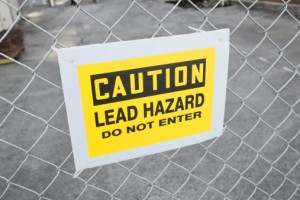 Under Title X, or the Residential Lead-Based paint Hazard Reduction Act, landlords are required to disclose any known lead-based paint or hazards in their rental property before signing or renewing a lease with a tenant.
The law was enacted in 1992 to reduce the health threats of lead-based paint to adults and children. When lead-based paint peels, chips or is sanded, it can lead to lead poisoning, which affects nearly every system in the body. Infants and young children are particularly susceptible. Lead poisoning can lead to behavior problems, impaired growth and reading and learning problems. The Centers for Disease Control (CDC) estimates 250,000 U.S. children ages one through five have elevated blood lead levels.
Adults with lead poisoning often have high blood pressure, memory problems, joint and muscle pain, nerve disorders, and problems during pregnancy.
It’s clear that following the law is important, and the right thing for landlords to do. Landlords are required to tell prospective tenants about the location and condition of lead-based paint in housing built before 1978. They are also required to provide information, such as pamphlets provided by the CDC, about lead paint hazards and how to prevent exposure. Tenants may then make an informed decision about renting or not.
Recently, a landlord in Bridgeport Conn. was found to have rented apartments to families on seven different occasions without making the necessary disclosures. The landlord was charged with:
- Failing to give tenants the required information pamphlets.
- Failing to include proper warning statements in the leases.
- Failing to disclose any known lead-based paint or paint hazards.
- Failing to provide records or reports on previous lead paint enforcement actions or violations.
The landlord is now facing a federal fine of up to $127,000 for his carelessness.
In Indianapolis, Ind., the chipping lead-based paint in a rental home led to serious health issues for a three-year-old. The child came down with a fever, stopped talking, slept constantly and could not eat. A medical exam revealed lead poisoning.
In 2007, the county health department tested the home and found hazardous levels of lead in the doors, door frames, window frames and other areas. Inspectors recommended what needed to be done to bring the home into compliance. The owner of the property at that time was First National Bank of America. The home was tested again in 2009, and a letter was sent to the new owner, a private landlord, outlining that all of the lead hazards had not been corrected.
The tenant started renting the home a year ago, and asserts she knew nothing of the dangers. Doctors told her to vacate the house as soon as possible. She is now in the process of moving, but fears the home will be rented to another unsuspecting tenant. The landlord of this property could face the same charges and fines as the Bridgeport landlord.
Lead poisoning is serious—and so are the laws landlords are required to follow to keep their tenants safe. Don’t make the same mistakes as these two landlords. Protect your tenants and yourself by following Title X to the letter.
Posted by Teresa on May 2, 2012 under Landlord Tips |
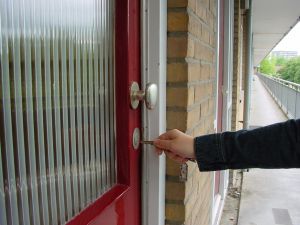 Rental property owners have the responsibility to provide their tenants with safe and habitable housing. Not only is it the law, but focusing on safety can prevent accidents and other problems that can lead to crime on your rental property, injuries for tenants and visitors, and lawsuits for landlords.
Here are some safety guidelines for every landlord and property manager:
- Conduct regular property safety inspections. Check for leaking pipes, broken windows, broken or rotted stair treads, and damaged wood on railings, balusters and decks. Inspect electrical wiring and make sure smoke and CO2 detectors are installed according to building codes and are in operating order.
- Perform preventative maintenance. Fix what needs to be fixed, especially things that cause a safety hazard, like tripping hazards, broken locks or unsafe railings.
- Provide fire extinguishers for each rental unit. Educate tenants on escape routes in case of a fire.
- Take care of broken tree limbs, snow and ice immediately. Clean up piles of fallen leaves, especially on the stairs, where they can cause slipping.
Preventing crime is everyone’s responsibility. To discourage criminal activity, tenants should:
- Keep vehicles locked and avoid leaving items in them in plain sight.
- Never leave valuables in vehicles.
- Observe their surroundings and report any suspicious activity, persons or vehicles.
- Remind tenants that they are responsible for the actions and behavior of all their guests.
- Never copy keys.
- Not allow strangers into a building with controlled access doors. Have them contact the person they are visiting.
Landlords and property managers should:
- Keep parking areas, sidewalks, common areas and stairwells well lit. Ask tenants to inform you of any burned-out lights.
- Provide properly locking doors and windows.
- Trim shrubs and trees around windows.
- Communicate with tenants. Ask about any potential crime or safety problems.
- Regularly inspect properties for signs of potential criminal activity.
- Include a clause in the lease that states tenants will be evicted for dealing, selling or manufacturing drugs on the property, or for allowing such activity by others.
- Screen all prospective tenants. Run a criminal background check on each applicant, so you know that they are who they say they are. Tenant screening will help keep violent criminals or sex offenders out of your rental property, and will help keep everyone safer.
Posted by Teresa on December 11, 2011 under Landlord Tips |
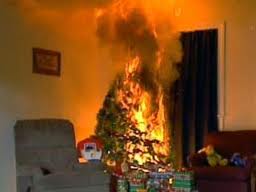 Despite the beauty of holiday decorations, it’s clear they can be very dangerous. According to the National Fire Protection Association (NFPA), Christmas trees were the first things to ignite in an average of 240 home fires per year between 2005 and 2009. These fires caused an estimated average of 13 deaths, 27 injuries and nearly $17 million in property damage per year.
And holiday lights and other decorative lights caused nearly 150 fires per year in that same period with an average of eight deaths, 14 injuries and $8.5 million in property damage.
Some of the top causes of the Christmas tree fires include:
- Electrical problems (33%)
- Heat source too close to the tree (20%)
- Decorative lights (13%)
- Candles (11%)
Help keep your tenants safe. Prepare a safety letter with fire prevention tips and make sure that each tenant gets one. Be sensitive to tenants’ various religious practices, and use non-denominational language.
Include the following tips in your notice:
- Follow the manufacturer’s directions for using holiday lights.
- Lights with loose cords, loose bulb connections and frayed, worn or broken cords should not be used.
- Lights should not be on when you are not at home. Unplug lights before leaving home or going to sleep.
- Never use candles on or near a tree.
- Place the tree at least three feet away from any heat source, including fireplaces, space heaters and heat vents
- If using a live tree, cut several inches off the base of the trunk before placing it in the tree stand and water it daily. Recycle the tree when it begins dropping needles. Don’t leave a dried-out tree in a storage area or against the building.
- Make sure you have a working smoke detector. Contact the rental office if you need to have yours checked.
Check with your local fire department for additional tips. It only takes a few minutes to prepare this notice and to help your tenants stay safe during the holiday season. Avoid the tragedy of a house or apartment fire.
Posted by Teresa on September 24, 2009 under Landlord Tenant Lawsuits, Landlord Tips |
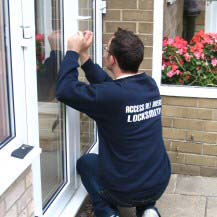
Keep tenants safe with proper deadbolt locks.
Nobody wants to receive a phone call like a landlord we know recently did: “I just slipped on some wet leaves and tore the ligaments in my knee.” Luckily, this landlord has plenty of insurance to cover just such an incident—but as everyone knows, making an insurance claim can lead to higher rates or even cancellation.
Landlords and property managers must do their due diligence when it comes to keeping tenants safe. Being prepared and performing a little hard work can go a long way to preventing problems that lead to injuries, lawsuits, and losses.
First, make sure your properties have sufficient locks on all the doors and windows. Deter criminals with good lighting, and keep shrubs away from windows. Make sure your tenants understand the importance of key control, and advise them in writing against venturing out alone—especially if the neighborhood is historically sketchy. Don’t rely on tenants to alert you to broken locks or burned-out lights. Do your own periodic inspections to stay on top of these issues that can cause a landlord to lose a lawsuit in a heartbeat.
Give each tenant an evacuation plan. Provide escape ladders if second-floor bedrooms can be cut off from exits in case of fire. Also, provide fire extinguishers in the kitchen and at least one other room.
Don’t require tenants to rake leaves or shovel snow. Either do it yourself, or hire professionals to take care of the grounds. Whether it’s from a pile of wet leaves or a slick patch of ice, tenants can be injured on your property if it’s not well maintained. There is no magic formula to prevent any and all injuries, but it still will benefit the landlord or property manager who does everything possible to keep the property safe. And, the courts see it as the owner’s responsibility, not the tenant’s.
Conduct safety inspections. You should keep your eyes peeled every time you enter your rental property, but be sure to also schedule periodic safety inspections. Look for problems with broken or rotted stair treads, wobbly railings on stairwells, porches, or decks, and windows that don’t operate properly. Make sure locks are easy to operate, and smoke and CO2 detectors are functioning. Trim broken tree limbs before they come down on a tenant’s head.
Finally, keep communicating with your tenants. Provide them with more information than you think they need—it could help you win a court case someday. Write up a list of safety tips, and firmly state your visitor and key policies in your lease. Alert tenants whenever maintenance or construction projects will be going on, and advise them to avoid the areas being worked on. And remember to check in with your tenants—ask if all their safety equipment is working properly, or if doors and windows are getting stuck. Keep communicating and you’ll find out what needs to be addressed much sooner—which could possibly prevent and injury for a tenant, and a lawsuit for you!
Remember, protect yourself and your property by
screening tenants prior to leasing. For more landlord resources, including forms and information on
tenant screening, turn to
E-Renter.com. You’ll know that you have the best possible tenants when you
prescreen tenants.
Posted by Teresa on June 30, 2009 under Landlord and Tenant FAQs, Landlord Tips |
 Every year, carbon monoxide poisoning kills 500 people.* Most could have been saved with a properly working carbon monoxide detector. If you are a landlord, your state may require carbon monoxide detectors to be installed and maintained in your rental units. But keeping your tenants safe is the right thing to do, whether or not you are required by law to install detectors.
What is carbon monoxide? Carbon monoxide (CO) is a toxic gas produced by incomplete combustion of fossil fuels: oil, natural gas, wood, coal, and gasoline. In homes, the major sources of CO are fossil fuel burning furnaces, boilers, water heaters and fireplaces.
How can you detect carbon monoxide? This is the problem. You can’t. Carbon monoxide is odorless and tasteless. It is colorless, and unlike other dangerous emissions, CO does not irritate the skin, eyes, or nose.
Is carbon monoxide dangerous? Yes! It is highly toxic, and CO poisoning can be fatal.
What are the warning signs of CO poisoning? Headaches, dizziness, tiredness, and nausea. These symptoms are often mistaken for the flu.
What should one do if CO poisoning is suspected? Open all windows, call the Fire Department and remove all people and animals from the home.
What precautions should a landlord take?
1. Have furnaces, fireplaces, chimneys, and venting systems inspected annually.
2. Properly install and periodically inspect CO detectors. All detectors have test buttons.
3. Replace batteries in battery-powered detectors. twice a year—when clocks are changed for daylight savings time.
4. Regularly check all gas-fired appliances for leaks.
5. Instruct your tenants to notify you immediately if they detect any odors that indicate leaks.
6. Never allow tenants to use the range or oven for heat or to cook with charcoal grills inside the home or garage.
7. Never paint over detectors.
8. Replace detectors when recommended by the manufacturer. Keep instruction manuals and record the date purchased and installed. Record replacement dates in your annual inspection/maintenance logs.
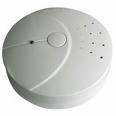 What types of carbon monoxide detectors are available? Some detectors run on batteries, allowing them to be placed wherever needed. Others are hard-wired with battery backups, and the third type plug into power outlets. Some have talking alarms, while others have digital displays.
Where are CO detectors installed? CO detectors should be placed five feet or more above the floor, because CO is lighter than air. They may go on the ceiling, as well. CO detectors should not be installed near a fireplace or gas-fired appliance, such as a water heater. Each floor should have at least one CO detector, ideally near sleeping areas.
Landlords are responsible for keeping their rental units habitable and safe. One easy way to do so, which may be required in your state, is to install and properly maintain carbon monoxide detectors in all your rental properties!
*Source: Journal of the American Medical Association, Vol. 299, No. 9.
For more landlord resources, including forms and information on
tenant screening, turn to
E-Renter.com. You’ll know that you have the best possible tenants when you
prescreen tenants.